
What Your Farmers Market Dollar Actually Does
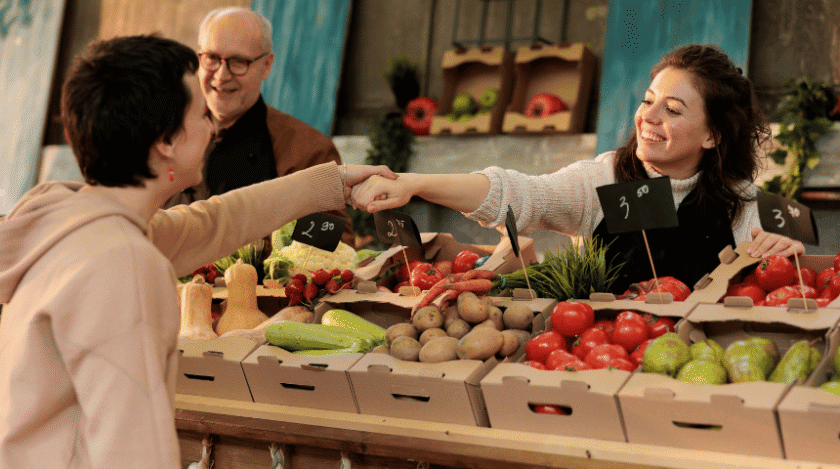
What Your Farmers Market Dollar Actually Does “When I started Good Agriculture, of course I started visiting farmers markets regularly and buying from local farmers. My friends and family started telling me how great my cooking had gotten. I hadn’t gotten any better at cooking—I was just buying great ingredients grown with love.” — Alex Edquist If you’ve ever spent a Saturday morning at a farmers market, you know the scene: coolers opening and closing, fresh produce arranged neatly on tables, and customers stopping to ask what’s good this week. What you don’t always see is the work that happened before the market opened. Long before the first customer arrives, produce has been harvested, washed, packed, loaded into trucks, and carefully arranged on tables. Then comes the drive to the market, the setup, a full day of talking with customers, and finally the trip back home to prepare for the next week. National Farmers Market Week was a chance to celebrate all of that work and the people behind it. What happens to your food dollar? Many people assume that most of the money they spend on food goes directly to the farmer who grew it. In reality, the journey from farm to table is often much more complicated. Food passes through distributors, processors, transportation companies, retailers, and many others before it reaches consumers. For years, the USDA’s Economic Research Service has found that farmers typically receive only a fraction of each dollar spent on food. In 2024, it was estimated that farmers received 5.8 cents from every food dollar. Direct sales change that equation. Whether farmers sell through a farmers market, a farm stand, or a CSA, they can keep a much larger share of what they earn. That money helps pay employees, purchase supplies, repair equipment, invest in the coming season, and support the farm for years to come. Every dollar spent at a farmers market doesn’t just buy food, it directly supports the person who grew it. Why farmers keep showing up Farmers markets aren’t easy. The hours are long, the weather is unpredictable, and every market day represents a big investment of time and energy. Still, many of the farmers we work with continue showing up every week because of the relationships they build there. Customers become familiar faces, farmers receive feedback directly from the people cooking their food, and children grow up stopping by the same stands each season. That kind of connection is difficult to find at your local grocery store. Of course, grocery stores play an important role in our food system, and farmers markets aren’t meant to replace them. But there is something special about knowing the person who grew your food, asking questions, and hearing the story behind what you’re buying. A good reason to stop by If you’ve been meaning to visit your local farmers market, it’s a great time to start. . Pick up a loaf of bread, a dozen eggs, or a basket of tomatoes. Strike up a conversation and see what’s in season. You might leave with great ingredients. And if Alex’s experience is any indication, people might even start complimenting your cooking.
What the One Big Beautiful Bill Means for Farmers’ Taxes & Cash Flow

Learn how the One Big Beautiful Bill impacts farmers’ taxes and cash flow planning, and what it could mean for your farm operation.
Fresh From the Farm: Holiday Gifts for Friends and Family

Looking for holiday gifts from local farms? Discover farm fresh gift ideas that support small agriculture businesses while giving friends and family something meaningful and unique this season.
Celebrate National Farmer’s Day with Our Farm Business Bundle!

Celebrate National Farmer’s Day by supporting your farm business with our exclusive Farm Business Bundle—designed to help farmers stay organized, profitable, and prepared year-round.
5 Simple Social Media Tips to Save Time and Boost Engagement for Your Farm

Struggling to keep up with social media on top of running your farm? These five simple social media tips will help you save time, stay consistent, and boost engagement so you can promote your farm business more effectively without adding stress to your day.
From Field Notes to Farm Data: Speaking Your Way to Better Records

Discover how turning field notes into organized farm data can improve accuracy, save time, and strengthen decision-making. Learn how simple voice-to-text tools can help farmers keep better financial and production records without adding extra work.
Master Your Farm Finances: Bookkeeping, Budgeting, and Tax Tips Webinar

Join our farm bookkeeping and budgeting webinar to learn practical tax tips, improve cash flow, and build a stronger financial foundation for your farm with clear, actionable strategies.
Farm Accounting Basics Webinar
Join our Farm Accounting Basics Webinar to learn the fundamentals of bookkeeping and financial management for your farm. Discover practical steps to organize your records, understand your numbers, and build a stronger financial foundation for your operation.
Recovering Together: Supporting Farmers Affected by Hurricane Helene

Farmers affected by Hurricane Helene are facing significant challenges as they work to rebuild and recover. Learn about available disaster assistance programs, financial resources, and practical next steps to help protect your farm’s future during this critical time.