
Strong bookkeeping habits can make it easier to understand your farm’s finances and prepare for tax season.
Join us November 12 at 3:30 PM EST for our free Farm Bookkeeping Basics webinar, where we’ll cover practical ways to organize your records, track income and expenses, and build a bookkeeping routine that works for your farm.
Not sure where to start? We’ll help point you in the right direction.
Good Agriculture makes farm bookkeeping and tax filing simple:
Spend less time on bookkeeping and more time running your farm.
Start with the support you need and adjust as your farm grows.
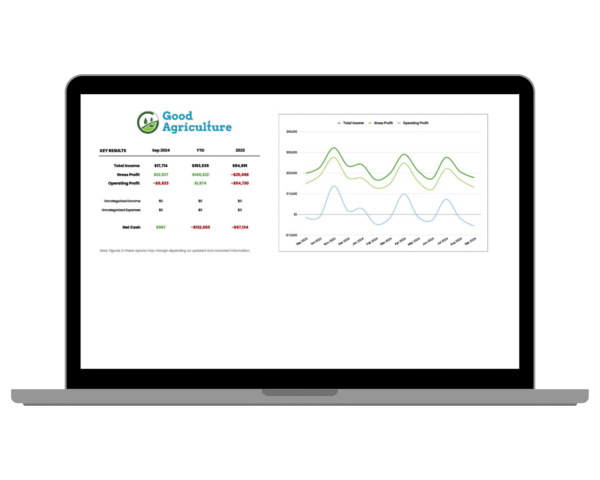
Get clear monthly reports so you know what’s working and what needs attention.
See where your money is going and make better decisions.
See how each part of your operation is performing as your farm grows and changes.
No new software to learn. We keep your books organized and up to date.
Farmers who’d rather spend time in the field than in the books.
This tier starts at $75/month for farmers up to $100,000 in annual revenue.
Farmers who want to save time and make data-backed decisions.
This tier starts at $150/month for farmers up to $150,000 in annual revenue.
Farmers who want to deeply understand their business, scale, and plan ahead.
This tier starts at $300/month for farmers up to $250,000 in annual revenue.

For bookkeeping farmers, we can help prepare and file farm taxes with support.
See how the numbers stack up before making a big change or raising capital.
We create social media content, website updates, newsletters, when they need it.
“Good Agriculture worked hard to get our farm’s finances cleaned up before the tax deadline. I appreciated their hard work and attention — it took a weight off my shoulders.”
“It was much easier, honestly. Much clearer… very easy to interpret and do the return this year!”
“This year has been great — we were fortunate to receive the RAFI grant, a few veterans grants, and support from Jane Goodall’s foundation. We would not know about these grants and countless more if it was not for Good Agriculture.”
“We pay for what’s important to us. Good Agriculture’s marketing team is worth their weight in gold. They truly help carry the “weight” of marketing my business so my load is lighter. I’m VERY grateful for their creative, professional, energetic, inspiring, efficient help!!”
“Managing finances isn’t my strong suit, so having y’all to handle that is helpful. Affordability and the value of having data organized for taxes makes it worthwhile.”
“Good Agriculture is amazing. I couldn’t ask for anything else on managing my finances. They made everything super accessible and easy.”
“Good Agriculture is a great asset for any farm looking for funding opportunities. Their weekly funding alerts filter out all the tedious legwork searching for funding opportunities.”
“For sure sales have gone up, our Miami route this past time was a record-breaking one.
And you’ve saved us a good 10
hours per week!”
“I like the weekly reports. Knowing what’s available and the due dates is really helpful all in one spot. With new programs being rolled out, it’s important to stay informed of what’s available.”
“Good Agriculture is fabulous. The information they’ve given us has been invaluable – it’s changed the way we run the business. Breaking down the fixed versus variable costs and especially the numbers by cut of beef has been eye-opening and allowed us to get back to financial sustainability.”
“Good Agriculture saved me days in pulling my finances together. They brought a level of professionalism and insightfulness to my finances – now I can focus on growing the farm (and spending more time with my wife!)”
“Good Agriculture designed a marketing campaign that has helped us maintain and grow our
vendor numbers and foot traffic through our normal slow season! We’re on track to double by the
end of next year!”
“Your CPA has done a great job and has been easy to work with. Good Agriculture has helped us get caught up on our finances and monthly bookkeeping, and I’m looking forward to getting a better handle on cash flow as continue to grow. ”
Healthier soil ecosystems require less fertilizer, pesticide, and herbicide (and some farmers also see higher yields) resulting in better profits for producers.
Vegetables grown in regenerative systems have up to 15x higher levels of nutrients, and pasture-raised animals have more heart-healthy Omega 3 fatty acids.
As soil regenerates, carbon dioxide is sequestered by plants from the air into the soil, making regenerative a key tool in reversing climate change.
Fewer chemicals required means less runoff into our drinking water, and increased soil water-holding capacity means more resilience to droughts and floods


