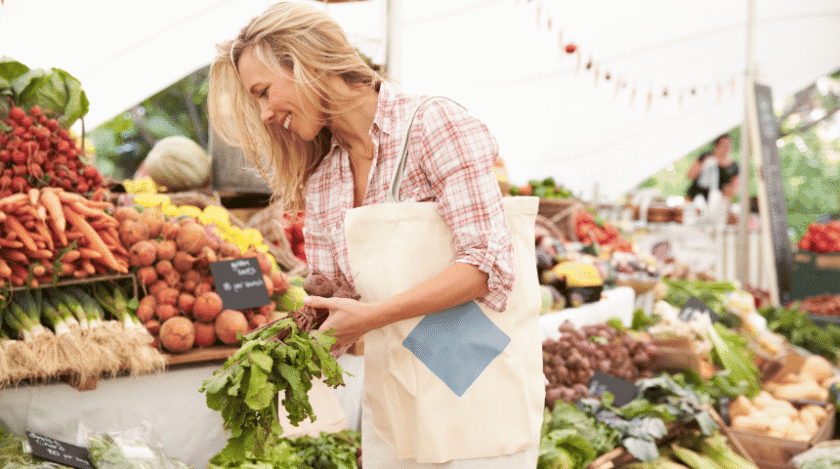
Farmers Market Marketing: Small Habits That Keep Customers Coming Back
Market season keeps you busy. Between prepping products, loading the truck, and setting up your booth, marketing is usually the first thing that gets pushed aside. That’s normal, but a few small habits can help customers find you, remember you, and keep coming back—all without adding much to your plate.
Here are three to start with, but you don’t have to do them all at once. These small efforts do matter. A recent national survey found that 80% of Americans attend a farmers market at least once a year, but not everyone who visits is a regular. About 39% of respondents attended farmers markets five or fewer times per year, compared with about 42% who attended six or more times per year.
That means your booth may be reaching both loyal customers and people who are just passing through or visiting for the first time. The market gives you the opportunity to make that first connection, but your marketing can help keep the relationship going after they leave.
1. Post your market schedule every week
Customers can’t buy from you if they don’t know where you’ll be. A quick weekly post is enough. Let customers know which market you’ll be at, on what day, and at what time.
Consistency matters more than polish. Post on the same day each week, and over time, your followers will start to look for it.
2. Put QR codes on your booth
Your customers are already standing right in front of you, so make it easy for them to stay connected after they leave the market.
A QR code on your table or signage can point customers to your website, social media, newsletter signup, online store, or another place where they can keep up with your farm. Keep it simple with one clear call to action, such as “Stay in touch” or “Follow along.”
However, you don’t want to rely on the QR code alone. Make sure your website URL and social media handles are clearly displayed, too. Not everyone will want to scan a code, and some customers may want to look you up later.
The goal is to give people a way to connect with you outside of the market. A customer may only see you once that week, or even once that season. If they follow you online or join your email list, you’ll have another opportunity to stay in touch and remind them where they can find you next.
3. Ask your regulars for a testimonial
Your repeat customers are some of your best marketing. Ask a few of them why they keep coming back, and ask if they’ll let you feature their testimonial on your social media or website.
Don’t overthink how you ask. Sometimes a simple question can get the conversation started:
- What’s your favorite thing you’ve bought from us?
- What keeps you coming back to our booth?
- How do you usually use this product at home?
You can write down their answer, ask them to send you a quick message, or, if they’re comfortable, pull out your phone and record a short video of them sharing their experience. You could even record them while they’re holding or using one of your products to make the testimonial feel more natural and personal.
An honest quote or video can build trust with new customers in a way your own marketing can’t. Keep these testimonials in your customer’s own words, and don’t over-polish them. It’s better for them to sound real than to sound professional.
Start with one
You don’t have to do it all at once. Pick the one that feels easiest, make it a habit, and add another whenever you’re ready.
Research has also found that regular farmers market shoppers can be particularly valuable customers. In one study, regular shoppers purchased more products and spent more on average than less-frequent shoppers.
You may not be able to turn every one-time visitor into a regular, but making it easy for people to find you again—whether that’s through your market schedule, social media, website, or email list—gives them a reason and a way to come back.
Marketing your farm shouldn’t feel like one more overwhelming task, and neither should the rest of the business side. At Good Agriculture, we help farmers stay organized and understand their numbers, so you can spend more of your time doing what you came to the market to do—sell what you grew.